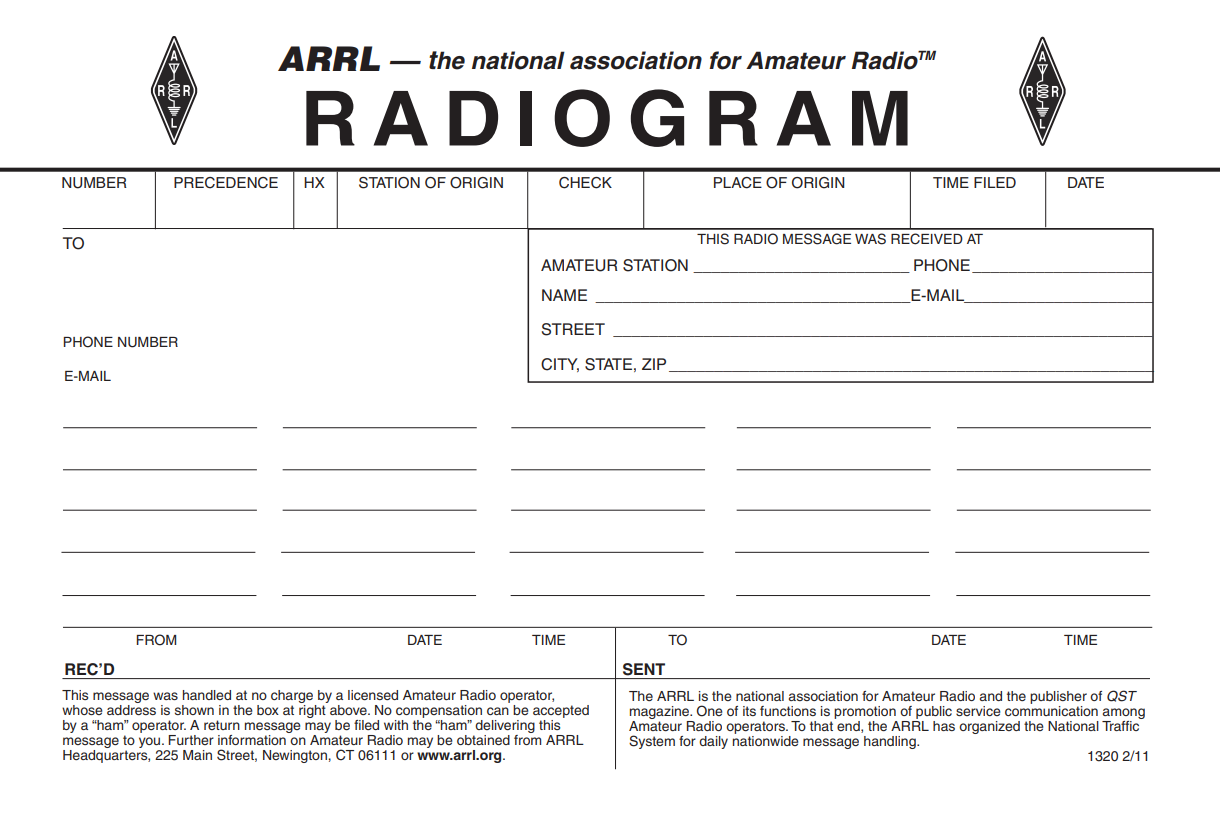
The way radio amateurs ensure, like journalists, that the information they transmit adheres to the highest standard and fights misinformation is simple but effective. To relay information on the air they use a form called radiogram.

“It is a form in which, before sending any information, we write it down in it. Then, we read it back to the sender to check there are no mistakes or that we are not adding or subtracting information from the message,” William Planas, a ham with more than ten years of experience explains.
These radiograms allow radio amateurs to have physical records of the messages they receive to guarantee they are transmitted exactly as the sender intended. For journalists, it would be like using their notebooks to double-check accuracy.
They transmit up to two or three times the same message, and then ask the other person who received the message to read it back to corroborate that what they wrote is a copy of what it was transmitted.
“If I sent you 25 words in the body of the message, you must have 25 words’. Those words are written down in the radiogram form,” Planas says.
Radio amateurs do fact-checking like journalists. What ham radio operators do differently is conduct drills and prepare for the worst. They gather together in radio clubs, run exercises, and rehearse. We encourage you to do the same at least twice a year. Organize drills with the ARES team and learn from your mistakes. If you can identify three things that went well and three things that failed, it will be a success”, Planas says. “Then, you work on implementing the lessons learned.”
The kind of information that you can relay through radio with a ham or GMRS license include:
- Structure/damage status, including houses, buildings, public buildings, hospitals, clinics, labs, blood banks, schools and landmarks affected by the natural disaster.
- Infrastructure/damage status, including roads (blocked or open), bridges, dams, ports, harbors, airports, power, internet and communication towers, cell phone reception, solar farms, windmills, water infrastructure, and cemeteries affected by the emergency.
- Environmental status, including flooding, landslides, overflow rivers.
- Weather status, including rainfall, wind speed, wind guts, surge and tidal well, rip currents, hail, NWS Advisories, warnings, and alerts.
- Assistance status, including shelters (available, open or full); pet-friendly shelters; oasis locations and hours of operation; food banks locations and hours of operations, churches or religious groups providing assistance; medicines needed in hospitals, clinics, shelters or any other location; blood, platelet, and plasma needed in blood banks; health devices and health supplies needed in hospitals, clinics or any other location; kids supplies needed in any location, diapers for children and adults needed in any location.
- Professionals status like doctors, nurses, paramedics, dentists, midwives, psychologists, psychiatrists, anesthesiologists, firefighters, caregivers, vets, among others, needed in any location affected by the natural disaster. Other professionals needed like electrical engineers, electricians, plumbers, carpenters, debris and garbage collectors, construction workers, cooks, mechanics, and/or volunteers for specific tasks.
- Population status, including towns or people isolated, amount of people in need of rescue, details and types of rescue or assistance needed: boats, trucks, tractors, cranes, time, date, etc.
- People ‘s status, like details and information about people trying to contact family members or to let them know about their welfare status in the US and all over the island.
Reporters status. Ham radio or GMRS operators can relay reporters check-ins and safety status to other reporters or people, as agreed and instructed.
Download a radiogram here.
Read more about what radio amateurs and journalists have in common during natural disasters here.